https://x.com/al_tools43377/status/2059650350660063663?s=20
99% of people delete the wrong things when Gmail storage gets full.
They remove emails.
But Google hides the biggest storage hog somewhere else.
I freed 18GB without touching a single important email.
Here’s the first place you should check 👇
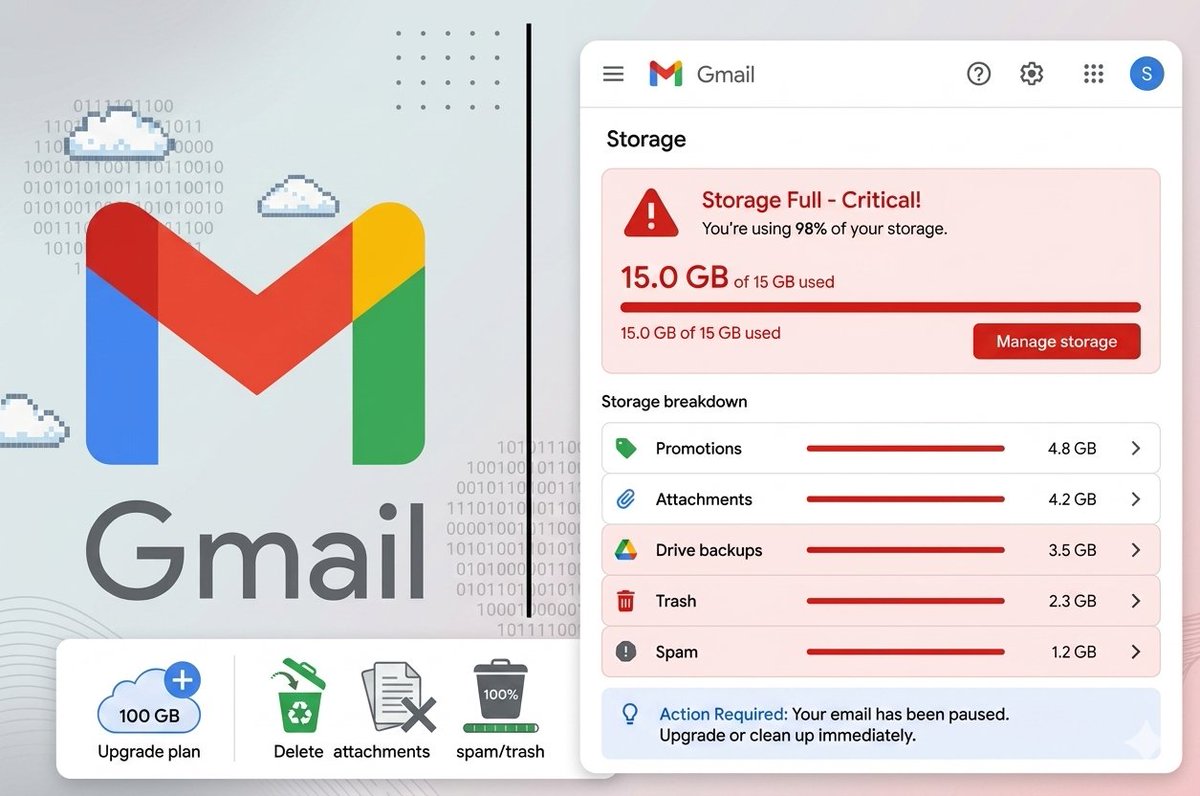
1. THE PROMOTIONS TAB BLACK HOLE
Years of:
• shopping emails
• coupons
• newsletters
• OTPs
• marketing blasts
…are quietly eating storage.
Most people never clean them.
Search this in Gmail:
category:promotions older_than:1y
Then mass delete thousands instantly.
1. THE PROMOTIONS TAB BLACK HOLE
Years of:
• shopping emails
• coupons
• newsletters
• OTPs
• marketing blasts
…are quietly eating storage.
Most people never clean them.
Search this in Gmail:
category:promotions older_than:1y
Then mass delete thousands instantly.
3. GOOGLE DRIVE BACKUPS YOU FORGOT EXISTED
Old phone backups.
WhatsApp backups.
App backups.
Duplicate folders.
Most people never check Google Drive storage separately.
Go to:
Google Drive → Storage
Sort by largest files first.
4. TRASH IS NOT ACTUALLY DELETED
Deleting an email doesn’t instantly free storage.
Gmail keeps deleted files in Trash for 30 days.
Same with:
• Google Photos
• Google Drive
Empty all 3 trash folders manually.
5. SPAM EMAILS STILL USE STORAGE
Spam isn’t magically deleted forever.
Thousands of junk emails:
• fake invoices
• crypto scams
• random promotions
…still occupy storage.
Search:
in:spam older_than:6m
Delete everything.
6. GOOGLE PHOTOS IS SECRETLY CONNECTED
Most people blame Gmail…
But Google Photos is usually the REAL storage killer.
Especially:
• videos
• WhatsApp media
• screenshots
• auto-backups
Go to:
Review largest items first.
7. THE “HIDDEN LARGE FILE” SEARCH
This single search exposes years of forgotten junk:
larger:20M
You’ll instantly find:
• giant videos
• old presentations
• ZIP archives
• backups
• duplicates
Delete carefully.
8. EMPTY STORAGE ≠ CLEAN ACCOUNT
Google combines storage across:
• Gmail
• Drive
• Photos
So deleting emails alone often changes nothing.
That’s why people stay stuck at:
“98% used.”


No comments:
Post a Comment